 Texas Accident & Injury News


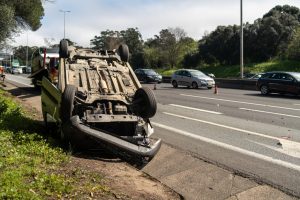
Rollover accidents have a higher risk of ejection.
Woman Ejected, Killed in Single-Vehicle Rollover on Northwest Loop 1604
According to a KSAT News report, a 19-year-old woman is dead after a tragic crash on the Northwest Side.¹
Police reported the accident happened at around 5 p.m. Wednesday, September 2nd, on Northwest Loop 1604 near Bandera Road. The woman, later identified as 19-year-old Jala Yasmeen Charles, was driving a Chevy Suburban northbound when she left the roadway for unknown reasons and entered the grassy median.
Her vehicle then crossed into the southbound lanes before rolling multiple times, causing her to be ejected from the vehicle.
First responders found Charles and pronounced her dead at the scene.
No other injuries were reported. The investigation is ongoing.
Did You Know?
According to TxDOT crash data, 26,747 crashes across Texas in 2024 involved at least one 19-year-old driver. Of those crashes, 163 were fatal.²
When Single-Vehicle Crashes Are Fatal: Does the Surviving Family Have Legal Options?
When someone dies in a single-vehicle crash, the surviving family may assume there is no one to hold responsible.
After all, there wasn’t another vehicle involved.
But “single-vehicle accident” only describes how many vehicles crashed. It doesn’t necessarily tell us what caused the accident.
Sometimes a driver loses control because of a mistake. In other cases, another driver, a defective vehicle component, a dangerous roadway condition, or another outside factor may have contributed.
When the cause isn’t immediately clear, further investigation may reveal whether the family has legal options.
Another Driver Can Cause a Crash Without Making Contact
Not every driver who causes an accident actually collides with the victim.
Imagine you’re traveling down the highway when another vehicle suddenly swerves into your lane. You turn sharply to avoid being hit, leave the roadway, and roll your vehicle.
The other driver never touches your car and continues down the highway.
If witnesses, dashcam footage, or other evidence identifies that vehicle, its driver could potentially share responsibility for the crash.
These are sometimes called no-contact accidents.
That’s one reason witness statements and video footage can become especially important when investigators are trying to determine why a vehicle suddenly left the roadway.
A Defective Vehicle or Component Could Be Responsible
Sometimes the problem begins with the vehicle itself.
A driver may suddenly lose control because of a defective tire, steering component, brake system, suspension part, or another critical component.
Suppose a tire unexpectedly fails while someone is traveling at highway speed. The driver loses control, leaves the roadway, and the vehicle rolls.
An investigation may need to determine whether the tire failed because it was worn or improperly maintained, or whether a manufacturing or design defect contributed.
If a defective product caused the crash, the manufacturer or another company involved with the vehicle or component could potentially be responsible.
Dangerous Road Conditions Can Also Contribute
The roadway itself may sometimes play a role.
Large potholes, missing or damaged signs, dangerous construction zones, debris, inadequate barriers, or other roadway hazards can cause a driver to lose control.
Responsibility for those conditions may rest with a city, county, state agency, contractor, or another entity.
Claims involving government entities may also be subject to special rules and shorter notice deadlines, so determining which agency or contractor was responsible for maintaining the roadway quickly is critical.
What If No Outside Factor Contributed?
Not every fatal crash gives rise to a wrongful death claim.
If the evidence ultimately shows that no other driver, defective product, dangerous roadway condition, or negligent third party contributed, there is no one against whom the family can bring a negligence claim.
That is why determining the cause matters before assuming either that a claim exists or that the family has no legal options.
How Are Fatal Single-Vehicle Crashes Investigated?
When there isn’t a surviving driver who can explain what happened, investigators have to reconstruct the events leading up to the crash.
Important evidence can include:
- Witness statements
- Surveillance or traffic-camera footage
- Dashcam video
- Vehicle event data
- Tire and mechanical evidence
- Skid marks and other physical evidence from the roadway
- The location and pattern of vehicle damage
Some of this evidence can disappear quickly. Video may be overwritten, damaged vehicles may be repaired or destroyed, and roadway conditions can change.
Preserving evidence early can therefore be especially important when the cause of a fatal crash remains uncertain.
Lost a Loved One in a Single-Vehicle Accident? Call Shaw.
When the cause of a fatal crash isn’t clear, an experienced attorney can help preserve evidence and investigate whether another driver, defective product, dangerous roadway condition, or other negligent party contributed.
If your family lost a loved one because of someone else’s negligence, you could be entitled to compensation for:
- Funeral and Burial Expenses
- Loss of Financial Support
- Loss of Companionship
- Mental Pain and Anguish
- Other Wrongful Death Damages
- And More
We’ll help you find out for free.
Call Shaw today at 800-862-1260 to learn more about your legal options. There are no fees, no obligations, and no pressure—just clear, compassionate legal guidance when you need it most.
We look forward to serving you.
Sources
²TxDOT Ages of Drivers in Crashes 2024