 Texas Accident & Injury News


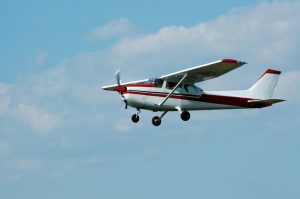
Over 1,000 private planes crash every year in the U.S.
Small Plane Crash Near Louisiana Airport Kills Seguin Couple
According to a KSAT News report, a Texas couple was killed in a plane crash near a Louisiana airport.¹
The Washington Parish Sheriff’s Office reported the crash happened at around 10:48 a.m. near the George R. Carr Memorial Airfield in Bogalusa, Louisiana, about 70 miles north of New Orleans and near the Mississippi state line.
A Beechcraft Bonanza crashed into a wooded area shortly after taking off for unknown reasons.
The couple was identified as William “Bill” Day, 68, and his wife, Tommie Day, 69, of Seguin, Texas. They were the only people on board the aircraft when it crashed.
The National Transportation Safety Board (NTSB) and Federal Aviation Administration (FAA) are investigating the crash.
Did You Know?
According to the Aircraft Owners and Pilots Association (AOPA), there were 1,097 general aviation accidents in the United States in 2023, the most recent year with complete data. Of those, 186 were fatal.²
Here’s When You Can Sue for a Private Plane Accident in Texas
When a privately operated aircraft crashes, the fact that someone was seriously injured or killed does not automatically mean there is a lawsuit.
The key question is whether someone’s negligence, a defective aircraft or component, or another legally responsible act contributed to the crash.
That can include accidents involving privately owned aircraft used for personal, recreational, or business travel. The exact legal issues may vary depending on how the aircraft was being operated, but the basic question remains the same: Did another person or company cause or contribute to the accident?
You May Have a Claim If Pilot Negligence Caused the Crash
Pilots are responsible for operating aircraft safely and following applicable aviation rules.
A wrongful death or injury claim may be possible if evidence shows the pilot caused the accident through negligence, such as:
- Flying in unsafe weather conditions
- Failing to properly plan the flight
- Ignoring warnings or safety procedures
- Flying while impaired
- Operating the aircraft beyond their training or qualifications
- Making a preventable error during takeoff, landing, or flight
The fact that a pilot was also injured or killed does not necessarily eliminate a passenger’s family’s legal options.
Depending on the circumstances, a claim may still be made against available insurance coverage, the pilot’s estate, or another responsible party.
You May Have a Claim If Poor Maintenance Caused the Accident
A private aircraft depends on regular inspections and properly performed maintenance to remain safe.
If a mechanic, maintenance company, or aircraft owner failed to identify or properly repair a dangerous problem, and that failure contributed to the crash, they may be legally responsible.
Examples could include problems involving:
- Engines or fuel systems
- Flight controls
- Electrical systems
- Landing gear
- Improperly installed or repaired parts
The important question is whether the maintenance problem was caused by negligence and whether it played a role in the accident.
You May Be Able to Sue If a Defective Aircraft Part Failed
Not every aviation accident is caused by pilot error or poor maintenance.
Sometimes a component fails because it was defectively designed or manufactured.
If a defective engine part, flight-control component, fuel-system component, or other piece of equipment caused or contributed to the crash, the manufacturer or another company involved with the defective product may potentially be liable.
These cases generally require technical evidence showing both that the product was defective and that the defect contributed to the accident.
More Than One Party Can Be Responsible
A private plane crash does not always have a single cause.
For example, an aircraft could have a mechanical problem that should have been discovered during maintenance, while a pilot’s actions after the problem developed may also have contributed to the outcome.
Depending on the evidence, potential responsibility could involve:
- The pilot
- The aircraft owner or operator
- A maintenance or repair company
- An aircraft or component manufacturer
- Another person or business whose negligence contributed to the crash
This is why determining whether you can sue usually depends on identifying what caused the accident and who was responsible for that cause.
What If the NTSB Hasn’t Finished Its Investigation Yet?
You do not have to wait for the NTSB to issue a final report before speaking with an attorney.
The NTSB investigates aviation accidents to determine what happened and identify the probable cause.³ Its findings can provide important factual information, but the agency does not decide whether a family is entitled to compensation in a civil case.
A preliminary report may provide only the facts known early in the investigation, while the final determination can take months.
If you are considering a claim, speaking with an attorney earlier can help determine whether evidence needs to be preserved while the federal investigation is still underway.
What If the Plane Crash Happened Outside Texas?
A Texas family may still have legal options even when the crash occurs in another state.
Private aircraft frequently cross state lines, and the people and companies involved may have connections to several different states.
Where a lawsuit can be filed and which law applies depends on the facts, including where the parties are located and where the conduct that contributed to the accident occurred.
The fact that a crash happened outside Texas does not automatically mean a Texas family cannot pursue a claim.
Lost a Loved One in a Private Plane Accident? Call Shaw.
If your family lost someone in a private aviation accident, the most important legal question is whether another person or company caused or contributed to the crash through negligence or a defective product.
An experienced attorney can review the available evidence and help determine whether your family has grounds to pursue a wrongful death claim.
You could be entitled to compensation for things like:
- Funeral and Burial Expenses
- Loss of Financial Support
- Loss of Companionship
- Mental Pain and Anguish
- Other Wrongful Death Damages
- And More
We’ll help you find out for free.
Call Shaw today at 800-862-1260 to learn more about your legal options. There are no fees, no obligations, and no pressure—just straightforward legal guidance when you need it most.
We look forward to serving you.