 Texas Accident & Injury News


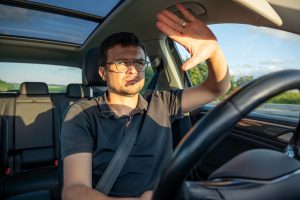
Are drivers responsible if sun glare causes an accident?
15-Year-Old Converse Girl Hospitalized After Driver Strikes Her From Behind, Citing Sun Glare
According to a KSAT News report, a 15-year-old girl was hospitalized after a driver struck her from behind in Converse on Monday morning.¹
Police reported the accident happened sometime during the morning of October 26th on a road near Canterbury Lane and Kerry Brook Drive in Converse.
The girl was walking along a road without a sidewalk when a vehicle struck her from behind.
She was taken to a local hospital with non-life-threatening injuries.
The driver remained at the scene and told police that sun glare had prevented him from seeing the girl. No arrests were made, and no citations were issued.
Did You Know?
According to TxDOT data, impaired visibility contributed to 3,963 crashes across Texas in 2025.²
Is a Driver Responsible for an Accident if They’re Blinded by Sun Glare?
Most drivers have experienced that tense moment when the rising or setting sun suddenly fills the windshield.
Traffic lights become harder to see. Pedestrians seem to disappear into the glare. Even the road itself can become difficult to make out.
But sun glare does not automatically excuse a driver who hits someone.
Texas drivers are expected to adjust their speed and driving to the conditions around them. State law requires drivers to travel at a reasonable and prudent speed and slow down when a special hazard involving pedestrians, weather, or road conditions exists.³
So when glare makes it difficult to see, the question becomes whether the driver responded reasonably to that danger.
“I Couldn’t See” Doesn’t Automatically Mean the Crash Was Unavoidable
Sun glare can be severe, but it is also a common and often predictable driving hazard.
If a driver realizes they cannot clearly see the road ahead, continuing at the same speed may become dangerous.
Depending on the circumstances, a careful driver may need to:
- Slow down
- Increase the space around their vehicle
- Use the sun visor
- Pay extra attention for pedestrians and cyclists
- Safely pull over if visibility becomes too poor to continue
A driver who simply continues forward despite being unable to see may still be responsible if they strike a pedestrian or another vehicle.
That does not mean every sun-glare accident is automatically negligent. Investigators still have to consider how suddenly the glare developed, the road layout, the pedestrian’s location, traffic conditions, and how much opportunity the driver had to react.
Why Sun Glare Is Worse During Fall and Winter
Drivers around San Antonio may notice glare becoming more frustrating as fall turns into winter.
The sun sits lower in the sky during these months, which means direct sunlight can enter the windshield at a much sharper angle.
That often puts the morning and evening sun directly in drivers’ eyes during commute times.
The problem can be especially serious on neighborhood roads and streets without sidewalks, where pedestrians may have little choice but to walk close to traffic.
For drivers, the important takeaway is simple: if you know a stretch of road puts you directly into the sun at a certain time of day, expect the glare before it happens and slow down accordingly.
A Dirty Windshield Can Make Glare Much Worse
Sometimes the sun itself is only part of the problem.
Dust, fingerprints, haze, and streaks on the inside of a windshield scatters light and make it much harder to see through glare.
A few simple habits can improve visibility:
- Keep both sides of the windshield clean
- Use your sun visor
- Wear polarized sunglasses that provide clear visibility
- Leave additional following distance
- Reduce your speed when you cannot see clearly
If you genuinely cannot see the roadway ahead, the safest option is to find a safe place to stop until visibility improves.
Pedestrians Face an Especially Serious Risk
A driver struggling with glare still has the protection of a vehicle around them.
A pedestrian does not.
That makes poor visibility particularly dangerous on streets without sidewalks, around schools, and in neighborhoods where people may be walking close to the roadway.
Drivers should expect pedestrians in these areas and travel slowly enough to respond if someone becomes visible ahead.
The fact that a pedestrian was walking along the road does not automatically mean the driver is free from responsibility. The circumstances of the crash still matter.
What If the Driver Doesn’t Receive a Ticket?
A family may assume that if police do not issue a citation or make an arrest, there is no personal injury claim.
That is not true.
Traffic citations and civil liability are seperate and answer different questions.
Police decide whether the evidence supports a traffic or criminal offense. A personal injury claim focuses on whether the driver failed to use reasonable care and whether that failure caused someone’s injuries.
You don’t have to commit a crime to be considered negligent, and neglience isn’t always a crime.
That means an injured pedestrian may still have a claim even if the driver remained at the scene, cooperated with police, and was never cited.
An Attorney Can Investigate Whether Sun Glare Really Made the Crash Unavoidable
When a driver says they were blinded by the sun, an attorney can look beyond that explanation and examine what actually happened.
That may include reviewing:
- Where the sun was positioned at the time of the crash
- The direction the driver was traveling
- How far ahead the pedestrian could have been visible
- Witness statements
- Nearby surveillance or dashcam footage
- The driver’s speed
- Road and lighting conditions
- Whether the driver took any steps to slow down before the impact
Insurance companies may point to glare as a reason to dispute fault. An attorney can gather the evidence needed to determine whether the driver actually responded reasonably to the conditions.
Child Injured in a Pedestrian Accident? Call Shaw.
Pedestrian crashes involving children can leave families dealing with medical treatment, insurance questions, and uncertainty about whether the driver could have prevented the accident.
If your child was injured because another driver failed to slow down, keep a proper lookout, or take reasonable precautions in poor visibility, you may be entitled to compensation for:
- Emergency Medical Expenses
- Ongoing Medical Treatment
- Rehabilitation and Therapy
- Pain and Suffering
- Future Medical Care
- Other Accident-Related Losses
- And More
We’ll help you find out for free.
At Carabin Shaw, we put Clients First. Our attorneys can investigate the circumstances of the crash, preserve evidence, handle communication with insurance companies, and help your family understand its legal options.
Call Shaw today at 800-862-1260 for a free consultation. There are no fees, no obligations, and no pressure, just clear, compassionate legal guidance when you need it most.
We look forward to serving you.
Sources
² TxDOT Crash Contributing Factors 2025
³ Texas Transportation Code § 545.351