 Texas Accident & Injury News


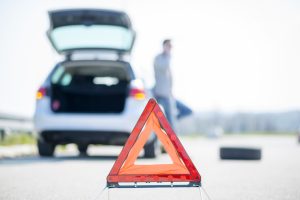
There are steps you can take to minimize accident risk in a stalled vehicle.
Pickup Truck Rear-Ends Stalled Vehicle on I-10, Driver Dies at Hospital
According to a KSAT News report, a man died at the hospital after a tragic crash involving a stalled vehicle on Interstate 10.¹
Police reported the accident happened at around 6:45 a.m. Sunday, August 9th, in the 6000 block of Interstate 10 near Vance Jackson Road on San Antonio’s North Side.
Investigators say a silver Infiniti G35 was stalled in the main lanes of I-10 when it was rear-ended by a Toyota Tundra.
The pickup driver remained at the scene, called 911, and told police they did not see the stalled vehicle in time to stop. They fully cooperated with the investigation.
The driver of the Infiniti was transported to a local hospital, where he later died from his injuries.
The Bexar County Medical Examiner’s Office will identify him and determine his cause and manner of death.
No other injuries were reported. The investigation remains ongoing.
Did You Know?
According to TxDOT data, 1,703 crashes across Texas in 2024 involved a vehicle disabled in a traffic lane.²
What to Do If Your Car Is Disabled in a Traffic Lane in Texas
A flat tire or dead battery is usually an inconvenience.
On the highway, it becomes a life-threatening emergency.
Drivers approaching from behind may be traveling 60, 70, or even 80 mph. Worse, they may see your vehicle ahead without immediately realizing it has stopped.
Knowing what to do can make a major difference.
If Your Vehicle Can Move, Get Out of the Traffic Lane
If your vehicle is still capable of moving, your first priority should generally be getting away from active traffic.
Turn on your hazard lights and, when you can safely do so, move onto the shoulder, into a parking lot, or to another location away from moving vehicles.
If staying in the traffic lane puts you in immediate danger, getting to a safer location is usually more important than avoiding additional damage to a flat tire.
Once you’re safely out of traffic, call for roadside assistance.
What If Your Vehicle Won’t Move?
This is when a mechanical problem becomes much more dangerous.
If your vehicle is completely disabled in an active traffic lane, call 911 and tell the dispatcher that you are stopped in moving traffic. Give them:
- Your direction of travel
- The highway or roadway name
- Nearby exits, intersections, or landmarks
- Your lane location, if you can identify it
Turn on your hazard lights immediately.
Whether you should remain in the vehicle or get out depends on the specific circumstances. Traffic speed, visibility, barriers, your lane position, and whether you have a safe escape route all matter.
Do not attempt to cross several lanes of high-speed traffic just to reach the shoulder. Follow instructions from emergency responders or dispatchers for your situation.
Make the Vehicle as Visible as Possible
A stopped car can be surprisingly difficult to recognize.
An approaching driver may initially assume your vehicle is simply moving more slowly, especially in heavy traffic or low light. By the time they realize you’re completely stopped, there may be very little distance left to brake.
Visibility can become even worse:
- Before sunrise or after dark
- During rain or fog
- Around curves or hills
- In dense traffic
- When larger vehicles block the view ahead
Use your hazard lights immediately.
If you have reflective triangles or other warning devices, only place them if you can do so without entering or standing near moving traffic.
Never stand behind your disabled vehicle in an active lane trying to warn approaching drivers.
Why Drivers Sometimes Hit Stalled Vehicles
The danger isn’t always that an approaching driver fails to see the vehicle at all.
Sometimes they see it but don’t immediately understand that it isn’t moving.
Drivers naturally expect traffic ahead to continue traveling in the same direction. That expectation can delay their reaction when a vehicle is unexpectedly stopped in a travel lane.
The risk increases when the approaching driver is:
- Distracted
- Speeding
- Following too closely
- Fatigued
- Driving in darkness or poor weather
- Unable to see around other traffic
By the time the driver recognizes the hazard, there may no longer be enough room to stop.
What Happens When a Stalled-Vehicle Crash Is Fatal?
When a crash involving a disabled vehicle results in death, surviving family members may have questions about whether the other driver could be legally responsible.
A wrongful death claim may be possible if another driver’s negligence contributed to the collision. Investigators may look at factors such as whether the approaching driver was distracted, speeding, following too closely, or had enough time to recognize and avoid the stalled vehicle.
Because liability is not automatic in rear-end crashes, a full investigation will be necessary before determining whether a wrongful death claim is appropriate.
Lost a Loved One After a Disabled-Vehicle Crash? Call Shaw.
If your family lost a loved one after a disabled vehicle was struck by another driver, you could be entitled to compensation for:
- Funeral and burial expenses
- Medical expenses incurred before death
- Loss of financial support
- Loss of companionship
- Mental anguish
- Other wrongful death damages
We’ll help you find out for free.
Call Shaw today at 800-862-1260 to learn more about your legal options. There are no fees, no obligations, and no pressure—just straightforward legal guidance when you need it most.
We look forward to serving you.