 Texas Accident & Injury News


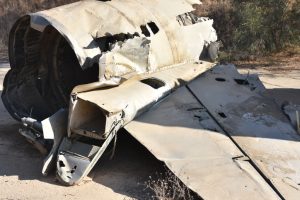
Plane crashes often have devastating consequences.
Training Plane Crashes in Corpus Christi, Two Hospitalized in Critical Condition
According to a report from News4SanAntonio, a training flight accident in Corpus Christi left two people critically injured Monday evening.¹
Police say the crash happened at around 7:40 p.m. on April 13th along the Highway 44 Frontage Road near Corpus Christi International Airport. First responders arrived to find a small aircraft on fire with two occupants inside.
Both individuals were transported to the hospital in critical condition and later transferred to Brooke Army Medical Center for further treatment.
Splendid Aviation flight school confirmed that the flight involved an instructor and a student. The aircraft reportedly came into contact with power lines before crashing. The school stated it is fully cooperating with the Federal Aviation Administration (FAA) and the National Transportation Safety Board (NTSB), both of which are investigating the incident.
Did You Know?
Between January and July 2025, there were 623 aviation accidents across the U.S., down from 729 during the same period in 2024.²
Accidents During Training Flights: Who’s Responsible?
Training flights are a standard part of learning to fly, but they operate very differently from typical flights. A student is actively flying the aircraft, while an instructor supervises and steps in when necessary.
When an accident happens, liability is not always straightforward. In aviation cases, liability is based on whether each party followed established safety procedures and acted with reasonable care.
The Instructor’s Role Is Active, Not Passive
A flight instructor is responsible for maintaining control of the situation at all times. They are not simply observing—they are there to prevent mistakes from turning into emergencies.
That includes:
- Monitoring the student’s actions continuously
- Taking control of the aircraft when safety is at risk
- Guiding navigation and hazard awareness
- Ensuring all procedures meet safety standards
Because of this active role, instructors are often a central focus in accident investigations.
Student Pilots Are Still Learning
Student pilots are still building judgment and experience. Tasks like judging altitude, identifying obstacles, and reacting quickly under pressure take time to develop.
This is especially critical during low-altitude flight, where there is little room for error. Hazards like power lines, terrain, and structures require constant awareness from both the student and the instructor.
A mistake at that level does not stay small—it becomes dangerous immediately.
How Training Flight Accidents Happen
Aviation accidents rarely come down to a single cause. They are usually the result of multiple breakdowns happening at once.
In training scenarios, those factors often include:
- Missed or delayed correction from the instructor
- Miscommunication between student and instructor
- Failure to identify obstacles like power lines
- Poor visibility or lighting conditions
- Split-second decision errors during low-altitude flight
Investigators work to piece together exactly how these factors combined.
Who May Be Held Responsible?
Liability in an aviation accident depends on what went wrong, not just who was in the aircraft.
Responsibility can extend to multiple parties, including:
- The flight instructor
- The flight school
- Aircraft maintenance providers
- Manufacturers of defective parts
Each party is evaluated based on whether they met safety standards and fulfilled their responsibilities.
Why Aviation Investigations Take Time
Investigations by the FAA and NTSB are detailed for a reason. These agencies review:
- Flight conditions and pilot actions
- Aircraft maintenance records
- Communication between instructor and student
- Physical evidence from the crash site
These findings determine not just what happened, but whether it could have been prevented.
When Legal Questions Come Into Play
When serious injuries occur in an aviation accident, families are left with more than just medical concerns.
If the investigation shows that safety procedures were not followed, equipment failed, or decisions fell below acceptable standards, legal action may be possible. These cases often involve technical evidence, but they follow the same core principle: whether someone failed to act with reasonable care.
Injured in an Aviation Accident? Call Shaw.
Aviation accidents can leave victims facing serious injuries, long recovery times, and complex questions about what went wrong. If you or a loved one were hurt in a training flight or aviation-related crash, you could be entitled to compensation for things like:
- Medical bills and hospital care
- Pain and suffering
- Long-term treatment or rehabilitation
- Lost wages during recovery
- And more
We’ll help you find out for free.
Call Shaw today at 800-862-1260 to speak with an experienced aviation injury lawyer in Texas. There are no fees, no obligations, and no pressure. Just clear, expert guidance when you need it most.
We look forward to serving you.
Disclaimer: This article is for informational purposes only and does not suggest that any individual or organization was at fault. The cause of the accident remains under investigation by the FAA and NTSB.