 Texas Accident & Injury News


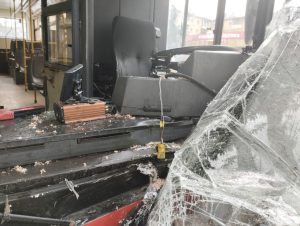
Bus accidents can have devestating consequences.
Woman Hit, Killed by VIA Bus While Trying to Cross I-10
According to a report from News4SanAntonio, a woman died after a pedestrian accident on Interstate 10 early Tuesday morning.¹
Police reported the fatal accident happened at around 4 a.m. Tuesday, May 26th, in the eastbound lanes of Interstate 10 near West Hildebrand Avenue on the North Side of San Antonio.
Authorities say a woman ran across the main lanes of traffic and was struck by a VIA bus. Her identity has not been released.
In a statement to News4, VIA Metropolitan Transit said the bus then collided with another vehicle while attempting to avoid the pedestrian. No passengers were on the bus at the time of the crash.
It was not immediately reported whether anyone in the second vehicle was injured.
The highway remained closed for several hours while crews investigated and cleared the scene.
Did You Know?
273 people across Texas have been injured in crashes involving at least one bus so far in 2026, according to FMCSA data.²
How Liability Is Determined in Secondary Crashes in Texas
Some accidents unfold in seconds and involve far more than one impact.
A driver reacts to an emergency ahead—a pedestrian, stopped vehicle, debris, or another crash—and that split-second reaction leads to a second collision moments later.
These are commonly known as secondary crashes, and they are often much more legally complicated than standard accidents because investigators must determine not only what started the danger, but whether the reaction afterward was reasonable.
What Is a Secondary Crash?
A secondary crash happens when an initial hazard creates another collision nearby.
In many cases, the original event forces drivers to make sudden decisions with very little time to react.
For example, a driver may:
- Swerve to avoid a pedestrian
- Slam on the brakes to avoid debris
- Change lanes suddenly to avoid a stalled vehicle
- Lose control while reacting to another emergency
Sometimes the second crash causes even more damage or injuries than the original hazard itself.
That is why investigators often examine the full chain of events instead of focusing only on the first impact.
Drivers Still Have a Duty to React Reasonably
Even during emergencies, drivers are still expected to respond as safely as possible under the circumstances.
That does not mean every crash can be avoided. But investigators will usually examine questions like:
- Was the driver speeding?
- Were they paying attention?
- Did they have enough time to react?
- Was the evasive maneuver reasonable?
- Could the second crash have been avoided?
In some situations, a driver reacting to danger may not be considered negligent at all. In others, investigators may determine the response created a greater danger than the original hazard.
For example, swerving into oncoming traffic or making an uncontrolled lane change can sometimes create more risk than controlled braking.
Liability Is Often Shared Between Multiple Factors
Secondary crashes are rarely simple because several different events may contribute to the final collision.
Responsibility can involve:
- The person who created the original hazard
- A driver who reacted carelessly
- Multiple drivers responding at the same time
- Poor visibility or roadway conditions
In this case, investigators will likely examine both the pedestrian entering the highway and how nearby drivers responded once the emergency appeared.
These situations often become highly fact-specific.
Bus Accidents Carry Additional Risks
Bus accidents can become especially dangerous because of the size and weight of the vehicle involved.
Large buses require more distance to stop and are harder to maneuver during emergencies. Sudden swerving or braking can quickly lead to additional collisions nearby.
Secondary bus crashes may involve:
- Collisions with nearby vehicles
- Loss of vehicle control
- Multi-vehicle pileups
- Passenger injuries when buses are occupied
Public transit and commercial drivers are generally held to high safety standards because of the risks these vehicles create on the roadway.
Why These Cases Often Require Detailed Investigation
Secondary crashes often involve conflicting accounts about what happened and who had time to react.
To determine liability, investigators may review:
- Traffic camera footage
- Witness statements
- Vehicle damage patterns
- Road conditions and visibility
- Driver speed and braking evidence
The goal is to determine not just what caused the first emergency, but whether the second collision was preventable.
Injured in a Multi-Vehicle or Bus Accident? Call Shaw.
Secondary crashes often involve multiple parties and disputed liability. Insurance companies often try to shift blame between drivers to reduce payouts.
If you were injured in a crash involving a bus or secondary collision, you could be entitled to compensation for:
- Medical bills and hospital care
- Pain, suffering, and long-term injuries
- Lost wages during recovery
- And more
At Carabin Shaw, we’ll help you find out for free.
Call Shaw today at 800-862-1260 to speak with an experienced San Antonio bus accident lawyer. There are no fees, no obligations, and no pressure—just straightforward legal guidance when you need it most.
We look forward to serving you.