 Texas Accident & Injury News


When child passengers are involved, DWI charges increase.
29-Year-Old Woman Arrested After 3 Young Children Injured in Drunk-Driving Crash
According to a report from News4SanAntonio, a woman was arrested after crashing her car and injuring three young children on San Antonio’s West Side.¹
Police say the crash happened at around 3 p.m. on Saturday, April 18th, near Cupples Road and Saltillo Street. A witness reported that a vehicle was veering out of its lane while traveling northbound from Highway 90. The witness also told police that three children, ages 8, 7, and 5, were unbuckled in the backseat.
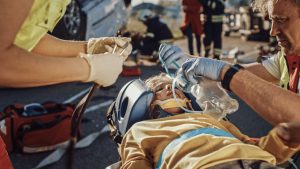
The vehicle crashed into a barrier and fence, injuring all three children. Two suffered minor injuries, while one was seriously injured. All were transported to a local hospital.
The driver, identified as 29-year-old Tracey Sandoval, was arrested and charged with:
- Intoxication Assault
- Two Counts of Injury to a Child
- Child Endangerment
She was later released on a combined $99,000 bond.
Did You Know?
Drunk driving contributed to 16,317 crashes across Texas in 2024, according to TxDOT data.²
Can You Sue a Drunk Driver for Injuring Your Child If They Are a Family Member?
When a child is injured in a crash, everything shifts immediately. Medical care becomes the priority, but questions about what comes next follow close behind.
What if the driver was someone you know? What if they’re part of your family?
These situations can feel complicated, but from a legal standpoint, the answer is more straightforward than most people expect.
Can You Sue a Family Member?
Yes. In Texas, a child has the legal right to pursue compensation after an injury, regardless of their relationship to the driver.
The law focuses on what happened, not who the driver is. If a driver’s actions caused the crash and led to injuries, a claim can be brought to recover damages.
This applies even in situations involving:
- Parents
- Relatives
- Household members
The key question is not the relationship. It is whether the child was injured due to another person’s actions.
Most Cases Start With an Insurance Claim
Even though a lawsuit is legally allowed, most cases do not start there.
They begin with an insurance claim.
Auto insurance is designed to cover injuries from crashes, including injuries to passengers inside the vehicle. That means a claim is typically filed to access available coverage for:
- Emergency medical treatment
- Hospital stays
- Follow-up care and rehabilitation
At this stage, the focus is on understanding the extent of the injuries and identifying how much coverage is available under the policy.
This is an important step because it sets the foundation for everything that comes next.
When a Lawsuit Becomes Necessary
Some cases can be resolved through insurance alone. Others cannot.
A lawsuit becomes necessary when the available coverage does not fully account for the child’s injuries or future needs.
This often happens when:
- The injuries are severe or life-altering
- Long-term care or rehabilitation is required
- Medical costs exceed the policy limits
- The insurance company disputes fault or undervalues the claim
Unfortunately, all of these scenarios are more likely in drunk driving cases involving child passengers.
Children present a unique challenge: Their bodies are still developing, so injuries are more likely to have long-term effects that are not immediately apparent. What looks manageable in the short term can become more serious over time.
Because of that, it is critical to fully evaluate the long-term impact before resolving a claim.
In some situations, liability may also extend beyond the driver. For example, negligent entrustment may apply if someone allowed an unsafe or intoxicated driver to use the vehicle.
Criminal Charges Are Separate From Civil Action
When alcohol is involved, criminal charges are often part of the situation.
Those charges are handled by the state and focus on punishment, such as jail time, fines, or probation.
A civil case is entirely separate.
A civil claim focuses only on financial recovery for the injured child. It does not depend on whether the driver is convicted, and it does not interfere with the criminal case.
Both processes can move forward at the same time, each serving a different purpose.
What Parents Should Do After a Crash
The steps taken after the accident directly affect both your child’s recovery and any potential claim.
You should:
- Seek immediate and follow-up medical care
- Ensure a police report is filed, which is required when injuries are involved in Texas
- Keep all medical records, bills, and treatment plans
- Document your child’s injuries and recovery progress
- Speak with a lawyer before discussing the case with insurance companies
One of the most important things to understand is this: once a claim is settled, it cannot be reopened.
That means any future medical needs must be accounted for upfront.
Was Your Child Injured in a Drunk Driving Accident? Call Shaw.
If your child was injured in a crash involving a drunk driver—even a family member—you could be entitled to compensation for things like:
- Emergency Treatment and Ambulance Costs,
- Pain and Suffering,
- Ongoing Medical Care,
- Long-Term Rehabilitation Needs,
- And More.
We’ll help you find out for free.
Call Shaw today at 800-862-1260 to speak with an experienced child injury lawyer in San Antonio. There are no fees, no obligations, and no pressure—just straightforward legal guidance when you need it most.
We look forward to serving you.